
AI Business10 min read
Only 15% of AI Code Generation Is Correct and Secure: For Developers
Security-first guide for developers using AI code generation. Adopt shift-left tests, plan-mode prompts, two-person review, and NIST and OWASP controls to...

Only 15% of AI Code Generation Is Correct and Secure: For Developers
AI code generation uses large language models and agents to produce functions, tests, or entire modules from natural-language prompts or existing source code. It works as a genuine productivity layer, not a substitute for engineering judgment, so the one rule worth adopting today is simple: treat every line an AI writes as untrusted input until a human reviews and tests it.
TL;DR:
- AI code generation can produce insecure patterns inherited from flawed training data, with nearly 30% of snippets containing security weaknesses.
- Using prompts that include detailed plans and tests before requesting code improves safety and accuracy, especially for security-critical tasks.
- Human review remains essential, particularly for dependency changes and security-sensitive files, to prevent supply chain and permission issues.
- Automated security tools should be integrated into the workflow to catch vulnerabilities early and ensure compliance with best practices.
- Deployment of AI code tools should focus on low-risk tasks with close supervision until their reliability and security track records improve.
Table of Contents
- What is AI code generation, exactly?
- How AI code generation changes your development workflow
- Tool and method categories for generating code with AI
- Security implications and common vulnerabilities in generated code
- Best practices for safe AI-assisted coding
- Benchmarks and the real limits of AI code generation
- How we apply these practices inside AmmarAI
- The habit most teams skip
- Try a workspace built for the same safe workflow
- FAQ
- Sources
What is AI code generation, exactly?
AI code generation starts with a model trained to predict the next token in a sequence, which means it is pattern-matching against its training data rather than reasoning through a specification the way a developer would. That distinction explains why generated code can look syntactically correct while quietly reproducing an insecure pattern it learned from flawed examples.
Three approaches dominate in practice. Completion and chat copilots suggest lines or snippets as you type and handle design questions in natural language. Fine-tuned code models are trained further on a specific language, framework, or company codebase to improve accuracy on narrow tasks. Autonomous agents go further still, planning and executing multi-file changes with minimal supervision.
A fourth category is emerging too: offline and edge generation. Research on App Inventor has explored running constrained models directly on mobile devices, trading off model size for privacy and offline access.
How AI code generation changes your development workflow
The clearest shift is pairing. A developer drafts intent, a copilot fills in boilerplate, and the human steers architecture decisions the model has no visibility into. Agentic tools extend this further, handling multi-file refactors or test scaffolding while a developer reviews diffs rather than writing every line.
That speed comes with trade-offs worth planning around:
- Shift-left documentation: writing interface contracts and test cases before requesting code gives the model a target to hit and gives you something to check output against.
- Context windows: longer prompts with more project context improve fidelity but cost more tokens and can slow iteration.
- Review load: faster code production shifts bottleneck time toward review and testing rather than away from it.
Teams that treat generation as a first draft, not a final answer, tend to see the workflow gains without absorbing the hidden review debt.
Tool and method categories for generating code with AI
Matching the tool to the job matters more than picking a single favorite. Here is a practical breakdown:
- IDE copilots handle line completions and small functions inside your existing editor, best for repetitive or boilerplate-heavy work.
- Chat and code models support design conversations, letting you talk through architecture before writing anything.
- Agents automate repo-level tasks like dependency upgrades or multi-file refactors, useful when scoped narrowly and monitored closely.
- Offline or low-code generators fit constrained platforms such as mobile or embedded targets where connectivity or privacy rules out cloud calls.
Prompt structure affects output quality as much as the model itself. Plan-mode decomposition, where you ask for a roadmap before any code, combined with bounded, single-purpose tasks and included tests or a README, produces more reliable results than open-ended requests. Our guide to writing better AI prompts covers how to structure that context.
When the codebase touches sensitive data, a local model or a private hosted endpoint keeps proprietary logic off third-party servers.
Pro Tip: Ask for a short implementation plan before any code, then approve or edit the plan rather than debugging a wall of generated output after the fact.
Security implications and common vulnerabilities in generated code
Generated code is not automatically insecure, but it inherits the flaws present in its training data, and researchers have started quantifying how often that happens.
An ACM study of 733 Copilot-generated snippets found 29.5% of Python and 24.2% of JavaScript snippets contained security weaknesses spanning 43 different CWE categories. That is a meaningful share of output needing a second look before it reaches production.
Three failure modes show up repeatedly:
- Insecure patterns inherited from training data, such as outdated cryptography calls or missing input validation.
- Hallucinated logic, where a function looks plausible but handles an edge case incorrectly or not at all.
- Unsafe dependency suggestions, including packages with known vulnerabilities or typosquatted names.
Agentic tools add a layer of risk on top: unreviewed supply-chain changes, excessive permission grants, and self-approval anti-patterns where an agent merges its own changes without a separate human sign-off. Watch for unexplained dependency additions, broadened file permissions, and authentication or cryptography code that an AI tool touched without a named reviewer attached.
Best practices for safe AI-assisted coding
Reducing risk takes a sequence, not a single tool. The OWASP secure coding with AI cheat sheet and NIST’s SSDF Community Profile for AI both point toward the same core pattern:
- Shift left: generate interface contracts, documentation, and unit tests before requesting bulk code, so you have a target to validate against.
- Gate with human review: require two-person review for security-critical files (authentication, cryptography, CI/CD, IAM policies), with the reviewer distinct from whoever accepted the AI suggestion.
- Automate the gates: run SAST, DAST, and infrastructure-as-code scanning in CI, tag AI-attributed changes, and block merges on critical findings.
- Decompose before generating: use plan-mode to sketch the approach, then request bounded, single-purpose code generation tasks rather than one large ask.
Google Cloud’s guidance on AI coding assistants echoes this sequence, recommending tests and documentation generated first as a way to anchor the model’s output to something checkable.
Pro Tip: Label every AI-attributed commit in your version control history so security reviews and incident response can trace generated code back to its origin.

NIST’s profile treats AI-generated artifacts as security-sensitive by default, meaning lineage tracking and least-privilege access apply to generated code the same way they apply to any other software component.
Benchmarks and the real limits of AI code generation
Function-level benchmarks tend to overstate what these tools can do, because isolated functions rarely expose the integration bugs that show up at repository scale. SecureAgentBench, which tests 105 realistic repository-level tasks, found that even the best-performing coding agent produced correct-and-secure solutions only about 15% of the time.

The same research found that explicit security reminders in the prompt often failed to prevent agents from introducing new vulnerabilities, suggesting the gap is architectural rather than a matter of better instructions. The practical takeaway: reserve agentic autonomy for low-risk tasks or workflows with heavy human monitoring, and treat repository-level automation claims with real skepticism until a given tool’s track record says otherwise.
How we apply these practices inside AmmarAI
We built our AI Code Generator around the shift-left pattern described above: it drafts functions, tests, and queries together rather than code alone. Shared workspaces keep prompts, generated artifacts, and review notes in one history, and personas let teams reuse vetted instructions instead of rewriting context each time. None of this replaces mandatory human security review.
The habit most teams skip
The teams getting real value from AI code generation are the ones who made unit tests and manual review mandatory for every generated change before they scaled usage, not after a security incident forced the issue. Start tracking defect and vulnerability rates in AI-touched code now, separately from the rest of your codebase, so you have evidence instead of a feeling about whether it is actually helping.
— Ahmed
Try a workspace built for the same safe workflow
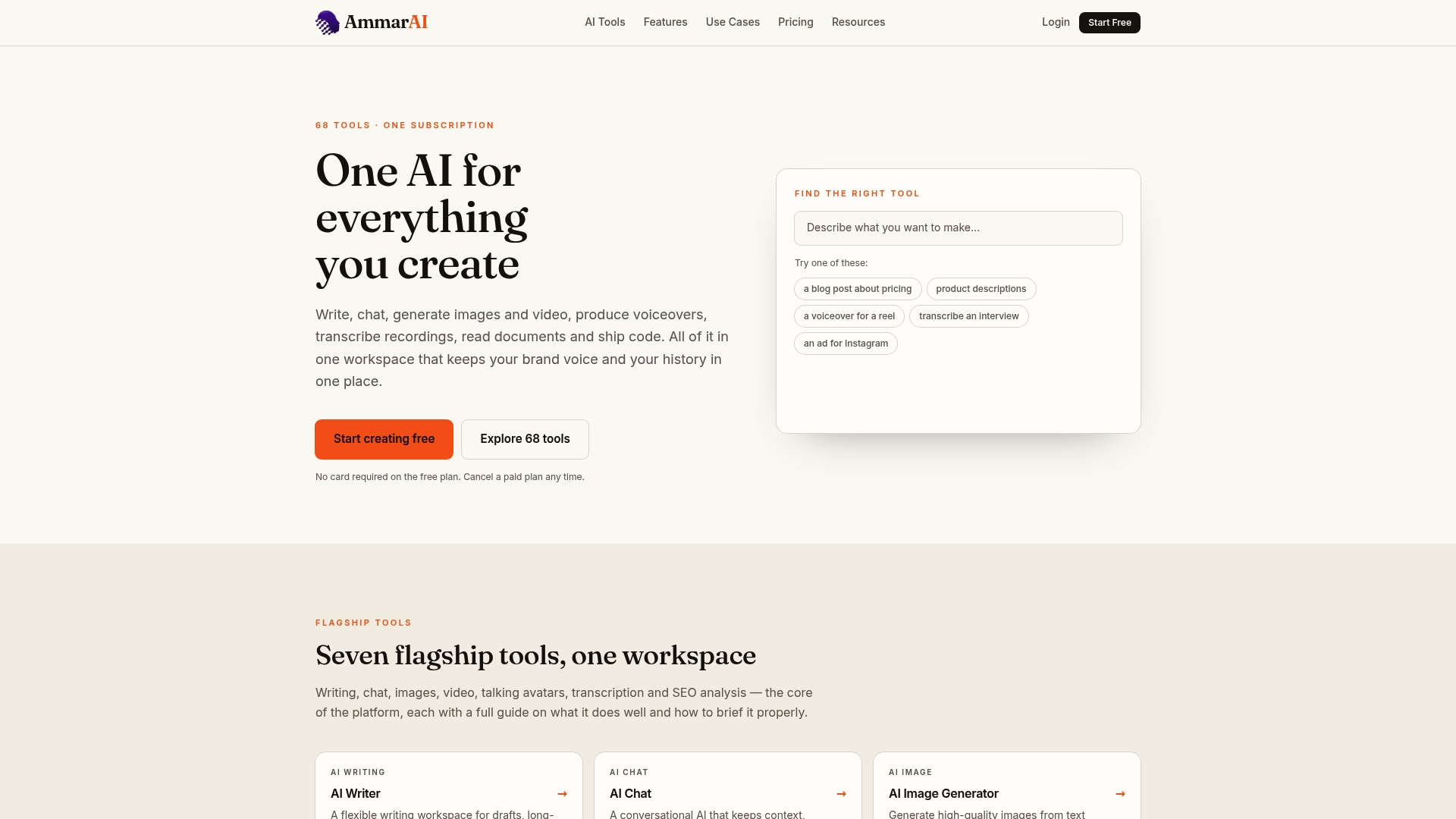
Keeping prompts, generated tests, and documentation in one place is easier when they live in one workspace instead of scattered across separate tools and subscriptions. That is the problem a unified AI workspace aims to solve, consolidating the writing, planning, and code-generation steps described above into a single history with consistent personas.
A few pages worth checking out if you want to put this into practice:
- The AI Code Generator for drafting functions, tests, and queries together.
- AI Personas for storing the prompt patterns and context rules your team settles on.
- The AI Agent Builder for structuring automations with clear boundaries rather than open-ended autonomy. For agent governance specifically, Brainiac Consulting’s guidance on human-in-the-loop approval is worth reading alongside it.
Our Free plan is a reasonable place to try the workflow before committing to a paid tier, and the pricing page lays out what Starter, Professional, and Ultimate add on top.
FAQ
What AI can generate code?
Several categories handle code generation, including IDE copilots, standalone chat-based code models, autonomous coding agents, and fine-tuned models trained on specific languages or codebases. The right choice depends on the task: completions for small snippets, agents for multi-file repository changes.
What is the 30% rule for AI?
One ACM study found a notable share of Python and JavaScript snippets generated by Copilot-style tools contained security flaws.
What did Elon Musk say about coding?
This article does not have a sourced, verified quote to attribute to him on this topic, so we cannot state a specific claim here without risking inaccuracy.
What is AI code generation?
AI code generation is the use of large language models or agents to draft, complete, or suggest application code from natural-language prompts or existing source code. It works best as a productivity layer paired with human review and automated security scanning, not as a replacement for engineering judgment.
How do I keep AI-generated code secure?
Follow a shift-left pattern: generate tests and documentation before bulk code, require human review for security-critical files, and run automated scanning in CI with merge blocks on critical findings. Guidance from OWASP and NIST both treat AI-generated code as security-sensitive by default.
Sources
- NIST SP 800-218A — SSDF Community Profile for AI model development
- Security weaknesses of Copilot-generated code in GitHub projects — ACM TSE
- SecureAgentBench: Benchmarking secure code generation under realistic vulnerability scenarios — arXiv
- Five best practices for using AI coding assistants — Google Cloud blog
- OWASP secure coding with AI cheat sheet
Recommended
Recommended for you
- 3–5 Email Pilot for Safe AI Sales Email Sequences With Human Review
Pilot a 3–5 email AI sequence with human review, deliverability checks, KPIs, prompt ready templates, and AmmarAI workflow tips to scale safely.
- Stop Tool Shopping: 8 Step AI Content Workflow Pilot for Marketers
Practical guide for marketers: run an 8 step AI content workflow pilot. Set orchestrator and agent steps, enforce governance, and track KPIs.
- Teams: Cut tool sprawl with one AI document analysis workspace
Enterprise teams get practical workflows, token limit workarounds, citation checks, and governance steps for reliable AI document analysis in a single...
Tools to try next
- AI Agent Builder
Build agents that run real workflows on a schedule or trigger — reading, deciding and acting without you.
- AI Social Media Agent
An agent that plans, writes, schedules and adjusts a month of social posts across your accounts.
- AI Phone Call Agent
A voice agent that answers and makes real phone calls, books appointments and logs every conversation.