
AI Business16 min read
3–5 Email Pilot for Safe AI Sales Email Sequences With Human Review
Pilot a 3–5 email AI sequence with human review, deliverability checks, KPIs, prompt ready templates, and AmmarAI workflow tips to scale safely.

3–5 Email Pilot for Safe AI Sales Email Sequences With Human Review
Use AI to draft and scale multi-touch sales email sequences, but never send unvetted AI copy straight to prospects. Confirm sender authentication (SPF, DKIM, DMARC) and one-click unsubscribe before scaling any volume. Start with a short pilot sequence of three to five emails, track reply and meeting rates, then expand once the numbers hold up.
TL;DR:
- Always verify sender authentication and include an unsubscribe link before scaling AI-generated sales sequences to avoid deliverability issues.
- Use AI mainly for drafting variations and personalization, but ensure humans review and approve the first touch and key elements to maintain trust.
- Start with small pilot sequences of three to five emails, monitor reply and meeting rates, and only expand once performance metrics hold steady.
- Keep a clear, segmented cadence tailored to contact stage, and integrate CRM signals for real-time sequence adjustments.
- Focus on clean lists, proper authentication, and compliance practices to prevent spam, especially as AI increases phishing risks industry-wide.
Table of Contents
- What AI sales sequencing is and when it works
- When to use AI vs. human writers in your sequence
- Step-by-step: build an AI-driven sales email sequence
- Templates, prompts and example sequences you can copy and adapt
- Deliverability, authentication and compliance checklist
- Measure, test, and optimize: KPIs and experimentation plan
- Practical constraints, pitfalls, and advanced tips
- Our take on AI-driven sales sequencing
- How AmmarAI supports your sales sequencing workflow
- FAQ
- Sources
What AI sales sequencing is and when it works
AI sales sequencing is the practice of using a language model to draft, personalize, and schedule a series of outbound emails, then continuing or branching that sequence based on triggers like opens, replies, or meeting bookings. It handles repetitive work well: writing multiple subject-line variants, filling personalization tokens from CRM fields, suggesting send times, and flagging which leads should get a follow-up versus a pause.

What AI does not do well is judgment. Voice consistency, high-stakes messaging to a key account, and anything with legal exposure still need a person reviewing before it goes out. Platform guidance from HubSpot recommends starting with lower-risk AI features, subject-line testing and send-time optimization, before automating entire outbound sequences. That staged approach keeps the technology doing what it is good at while a human owns the parts that affect trust.
Different sequence types call for different lengths and cadences:
- Cold outreach: four to six touches spaced two to three days apart, since first contact needs more nudges to land a reply.
- Post-demo follow-up: two to three touches within a week, focused on momentum rather than reintroduction.
- Re-engagement: three to four touches over two to three weeks, built around a reason to reconnect rather than a repeat pitch.
These aren’t rigid rules, but they reflect how buying attention decays at different stages of a relationship. A cold prospect needs more exposure to register your message. A prospect who just finished a demo needs fewer, faster nudges before they lose momentum.
When to use AI vs. human writers in your sequence
The clearest way to avoid sounding automated is to treat every AI draft as a draft, never a finished email. Three rules keep this simple:
- AI output is always a first pass. No sequence goes live without a human reading it line by line.
- The first touch in any sequence gets a full human edit, since it sets the tone for everything that follows.
- Subject lines and calls to action get separate approval, since those two elements drive most of the reply-rate variance.
A workable approval workflow looks like this: AI drafts the sequence, an SDR edits for voice and accuracy, a sales manager spot-checks a sample before it ships, and a compliance reviewer signs off on anything going to a regulated industry or a list requiring documented consent. Industry guidance from Litmus backs this structure: AI is strong at generating controlled variants for testing, but creative direction and brand alignment still need human refinement before anything reaches a prospect’s inbox.
Operationally, this works best with a few controls in place: a shared brand voice model so every rep’s AI output sounds like the same company, generation quotas to prevent runaway sends, version history so you can see what changed between drafts, and a clear escalation path for replies that need a fast human response. Our guide to automating versus keeping tasks human walks through this split in more detail for marketing teams building similar workflows.

Pro Tip: Keep a running swipe file of AI drafts your team rejected and why. It trains your prompts faster than any generic prompt library.
Step-by-step: build an AI-driven sales email sequence
Building a sequence that actually performs starts with a number, not a template. Here’s the order that works:
- Set a measurable goal and baseline. Decide what you’re optimizing for (reply rate, meeting rate, or pipeline generated) and pull your current numbers from past campaigns so you have something to beat.
- Segment and enrich your list. Pull contacts from your CRM, filter by fit, and layer in intent signals (recent funding, job changes, content downloads) so your highest-priority accounts get the most attention first.
- Design the cadence. Map out how many touches, how far apart, and what triggers change the path. A reply pauses the sequence. A booked meeting removes the contact entirely. No response after the final touch moves them to a slower nurture track.
- Write your prompt inputs. Before generating anything, define the persona, the specific pain point, the offer, the desired call to action, the tone, and a length constraint. Vague inputs produce vague emails.
- Run a pilot before scaling. Pick a sample of 50 to 150 contacts, run the sequence for two to three weeks, and set a clear threshold (for example, a reply rate that matches or beats your historical baseline) before you commit to a larger send.
The prompt inputs in step four deserve extra attention, since they determine whether the AI draft needs light editing or a full rewrite. A strong prompt includes:
- The persona’s job title, company size, and industry.
- The specific pain point you’re addressing, stated concretely rather than generically.
- The offer and the one action you want the reader to take.
- A tone instruction (formal, conversational, direct) tied to your brand voice.
- A hard length cap, since AI models default to longer copy than most sales emails need.
Sinch Mailgun’s 2026 Email Impact Report found that senders are increasingly investing in AI specifically for personalization and send-time optimization, which tracks with how most teams are actually using these tools: not for wholesale sequence generation, but for sharpening the parts that are tedious to do manually at scale.
Your pilot plan should include a rollback rule from the start. If spam complaints spike, if reply rates drop below half your baseline, or if a legal or compliance flag comes up, pause the sequence and fix the issue before resuming. Treating the pilot as a real test, with a defined sample size and a defined failure condition, is what separates a useful trial from a vanity metric exercise. For teams building this into an existing content pipeline, our walkthrough on integrating AI into content workflows covers how to connect this step to broader production processes.
Templates, prompts and example sequences you can copy and adapt
A working cold outreach sequence usually runs four emails. Email one introduces the problem and a one-line relevant proof point, with two or three subject-line variants to test (a direct one, a question-based one, and a curiosity-driven one). Email two, sent two to three days later, adds a different angle on the same pain point. Email three, a few days after that, includes a short case example or resource. Email four is a brief, low-pressure check-in that gives the prospect an easy out. Every email in this sequence should get a human pass on the first line and the CTA before it ships, since those two lines carry the most weight.
A post-demo follow-up sequence is shorter: three emails. The first goes out within 24 hours and recaps the key point from the call with a relevant link or resource attached. The second, sent three to four days later, addresses a likely objection. The third, about a week out, proposes a concrete next step like a pricing conversation or a trial start.
A re-engagement sequence for cold or stalled leads runs three to four emails: a brief re-introduction, a value-add message (a resource, an update, or a relevant insight), and a break-up email that closes the loop honestly rather than fading out.
For prompt recipes, structure your system prompt with four fixed fields: company and product context, the persona you’re writing to, the specific pain point, and the desired CTA. Keep the creativity setting moderate rather than maximal, since sales copy needs consistency more than novelty, and add a guardrail instruction that caps length and bans generic filler phrases. Our practical prompt library for email writing has ready-to-use versions of these recipes if you want a starting point rather than building from scratch.
Pro Tip: Generate three subject-line variants per email, but only ever send one at a time to a given segment. Testing all three against the same list muddies your data.
Deliverability, authentication and compliance checklist
None of the copywriting work matters if your emails land in spam. Gmail’s sender guidelines require bulk senders to authenticate outgoing mail with SPF, DKIM, and DMARC, and to include one-click unsubscribe functionality using List-Unsubscribe headers under RFC 8058 for any promotional message.
Gmail enforces a spam-rate threshold above which bulk senders face deliverability restrictions and limited mitigation options. Gmail’s bulk sender guidelines recommend keeping complaint rates well below that line, ideally under 0.1%, since recovery from a restriction takes sustained good behavior over consecutive days.
Before scaling any AI-generated sequence, confirm:
- SPF, DKIM, and DMARC records are correctly published and verified in DNS.
- Reverse DNS resolves properly for your sending domain.
- List-Unsubscribe headers are present and functional on every promotional send.
- Sending volume ramps up gradually on new domains rather than jumping straight to full scale.
- Your list was built through legitimate means, not scraped or purchased, since Mailgun and Sinch’s deliverability research found that B2B senders are disproportionately likely to use risky list-building methods that trigger spam flags.
That same research points to generative AI raising phishing risk industry-wide, which makes authentication and list hygiene more important, not less, as more teams automate outbound.
On the compliance side, know which legal basis you’re relying on for each list. Where legitimate interest applies, document a Legitimate Interests Assessment covering necessity and balancing against the recipient’s rights, and honor opt-out requests immediately rather than batching them. ICO guidance on direct marketing is a useful reference point for how this works in practice, though the exact rules depend on your market and the recipient’s location.
Measure, test, and optimize: KPIs and experimentation plan
A pilot without a measurement plan is just a guess with extra steps. Build your experimentation routine around these steps:
- Pick primary metrics first. Reply rate, meeting rate, and downstream conversion matter more than open rate, which is increasingly unreliable due to privacy-focused email clients.
- Track deliverability KPIs alongside performance KPIs. Spam complaint rate, bounce rate, and the trend in opens and clicks across sending cohorts tell you whether you’re damaging your domain reputation even if replies look fine short term.
- Set a real sample size and duration for every A/B test. A test run for two days on 40 contacts tells you nothing. Give each variant enough volume and enough time to reach a result you can trust before declaring a winner.
- Review weekly, decide monthly. Weekly check-ins catch problems early. Monthly reviews are where you decide whether to scale a sequence, kill it, or revise the targeting.
- Audit your data quality on a recurring basis. Stale CRM fields and outdated intent signals quietly degrade personalization quality even when your prompts stay the same.
Practical constraints, pitfalls, and advanced tips
The most common failure mode isn’t bad AI output, it’s bad inputs. Poor list hygiene, over-automated sequences with no human checkpoint, missed opt-out handling, and lists built from scraped or purchased contacts cause more deliverability damage than any single weak email ever could.
The fixes are mostly structural rather than technical:
- Standardize on a shared brand voice template so every generated draft starts from the same baseline tone.
- Keep approval gates at the first-touch and CTA level, even when the rest of the sequence runs on autopilot.
- Sync sequence triggers directly to CRM events (reply received, meeting booked, deal stage changed) so the sequence reacts to real signals instead of a fixed calendar.
- Stage your rollout: pilot small, confirm deliverability holds, then expand in increments rather than one big jump.
Teams that pair a brand voice model with bulk sequence generation and a CRM-connected marketing assistant tend to cut their iteration time significantly, since they’re not rewriting tone from scratch on every new campaign. The bigger win isn’t speed, though, it’s consistency across reps, which is what actually protects the brand voice readers notice.
Pro Tip: Run your break-up emails through a separate tone check. They’re the easiest place for AI drafts to sound passive-aggressive instead of genuinely low-pressure.
Our take on AI-driven sales sequencing
We think the biggest risk in this space right now isn’t bad AI writing, it’s teams treating AI drafts as finished products because the first version sounded fine, rather than building robust systems with human-in-the-loop AI processes to maintain quality. A sequence that reads well in isolation can still tank your domain reputation if authentication isn’t set up or if the list wasn’t built cleanly.
Our stance is conservative on purpose: pilot everything with a real success threshold before scaling, keep a human on the first touch and every CTA, and treat deliverability as the ceiling on what volume you’re allowed to send, not an afterthought you fix later. Reply rates and meeting bookings matter, but they’re downstream of whether your emails land in the inbox at all. Brand trust, once damaged by a spam-flagged domain or a tone-deaf automated sequence, takes far longer to rebuild than it took to break.
— Ahmed
How AmmarAI supports your sales sequencing workflow
We built our workspace around the exact workflow this guide describes: draft fast with AI, keep a human in the loop, and never lose consistency across reps or campaigns. Instead of stitching together a separate writing tool, a separate CRM sync, and a separate approval process, we put all of it in one place with one shared history and one brand voice.
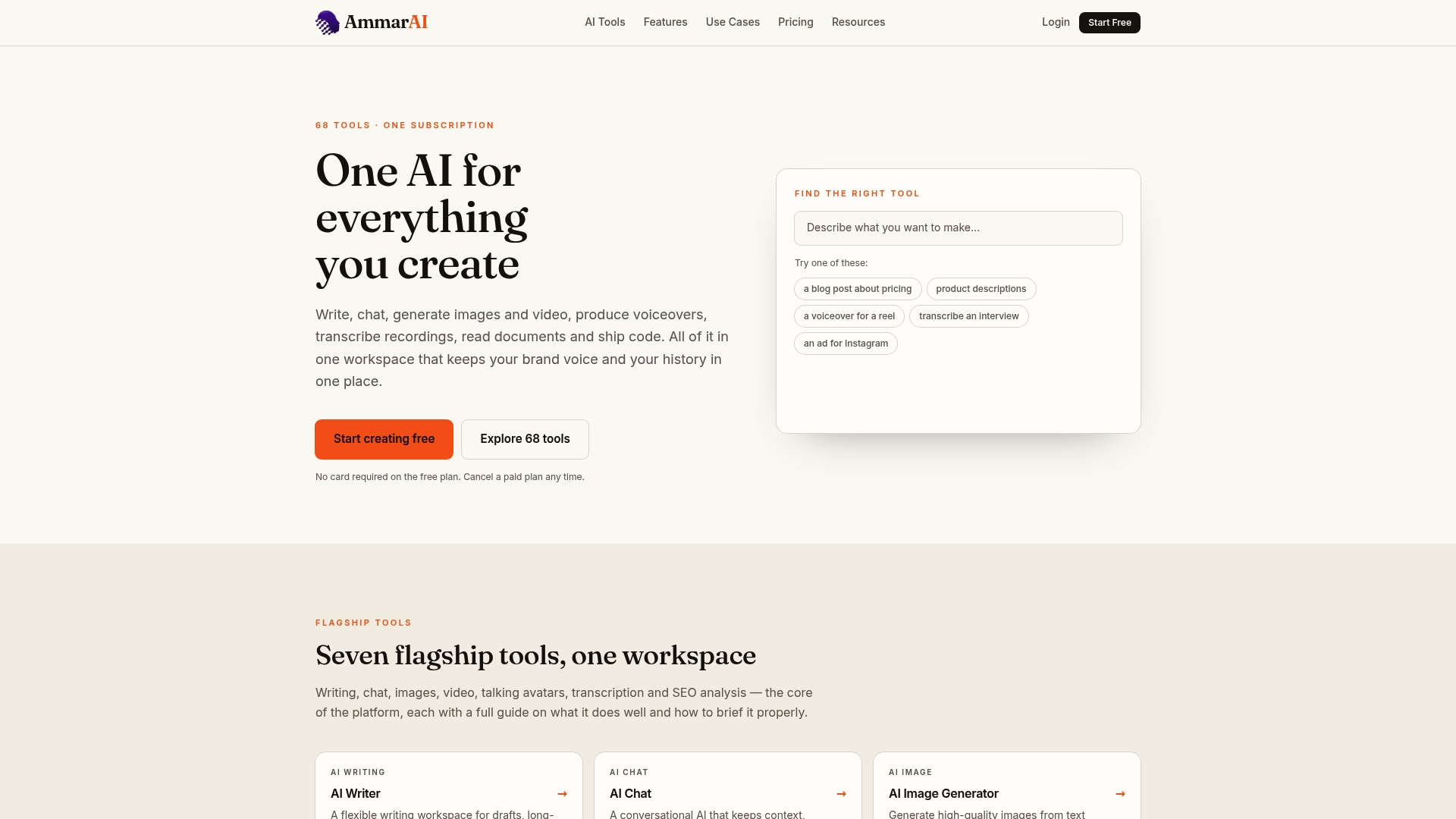
Inside the platform, a few features map directly onto the sequencing playbook above:
- A brand voice model that keeps every generated draft, from any rep, sounding like the same company.
- Bulk sequence generation for drafting multiple touches and subject-line variants at once instead of one email at a time.
- An AI marketing bot for campaign-level strategy support alongside individual email drafts.
- CRM-connected workflows that let sequence triggers react to real signals like replies or booked meetings.
The practical first step is small: start on our Free plan and run a three-email pilot using the prompt structure from this guide. If it performs, our Starter plan at $9.99 per month and Professional plan at $29.99 per month add the generation volume and team features to scale it properly. Full details on brand voice, bulk generation, and CRM sync are on our platform features page.
FAQ
What’s a good email sequencer for sales?
A good sequencer combines AI-assisted drafting with CRM-triggered sending rules, so messages adjust automatically when a prospect replies or books a meeting. Look for one that supports a shared brand voice, authentication setup, and a clear human-approval step before sends go out.
What is an effective email sequence for sales?
An effective sequence matches its length to the stage of contact: four to six touches for cold outreach, two to three for post-demo follow-up, and three to four for re-engagement. Each touch should add a new angle rather than repeating the same pitch, and the sequence should pause automatically on a reply.
Which AI is best for writing sales emails?
There’s no single best tool for every team, since the right choice depends on whether you need deep CRM integration, bulk generation, or tight brand voice control. Platform guidance from HubSpot recommends starting with tools that tie personalization to CRM data rather than generating generic copy in isolation.
What is the 30/30/50 rule for cold emails?
Definitions of this rule vary across sources, so treat any specific split with some caution. A commonly cited version allocates roughly a third of your effort to list quality, a third to the subject line and opening, and the remainder to the offer and call to action, though no single authoritative source fixes these exact numbers.
Do AI-generated sales emails need an unsubscribe link?
Yes, for any promotional message. Gmail’s sender guidelines require one-click unsubscribe functionality via List-Unsubscribe headers under RFC 8058 for bulk senders, regardless of whether the copy was written by a person or an AI tool.
Sources
- Email sender guidelines FAQ - Gmail Help
- The 2026 email impact report by Sinch Mailgun
- Guide to AI in email marketing — Litmus
- AI email marketing — HubSpot Blog
Recommended
Recommended for you
- Only 15% of AI Code Generation Is Correct and Secure: For Developers
Security-first guide for developers using AI code generation. Adopt shift-left tests, plan-mode prompts, two-person review, and NIST and OWASP controls to...
- Stop Tool Shopping: 8 Step AI Content Workflow Pilot for Marketers
Practical guide for marketers: run an 8 step AI content workflow pilot. Set orchestrator and agent steps, enforce governance, and track KPIs.
- Teams: Cut tool sprawl with one AI document analysis workspace
Enterprise teams get practical workflows, token limit workarounds, citation checks, and governance steps for reliable AI document analysis in a single...
Tools to try next
- Brand Voice
Define how your brand sounds once, and have every writing tool follow it.
- AI Agent Builder
Build agents that run real workflows on a schedule or trigger — reading, deciding and acting without you.
- AI Social Media Agent
An agent that plans, writes, schedules and adjusts a month of social posts across your accounts.