
AI E-commerce11 min read
Scale AI Product Descriptions Safely: 2026 Compliance for Ecommerce
Get a compliance first playbook with prompt templates and a Baymard backed UX checklist. Follow the 2026 FTC and Google Merchant steps to scale AI product...

Scale AI Product Descriptions Safely: 2026 Compliance for Ecommerce
Yes, AI can produce usable product descriptions quickly, but only when you pair it with structured product data and a strict human-review step. Start by choosing a generation approach that fits your catalog size, building a clean spreadsheet of product attributes, and setting a review rule before anything goes live. Check platform and legal requirements, including FTC substantiation rules and Google Merchant formatting, before you publish a single line.
TL;DR:
- Using AI for product descriptions requires a structured data sheet and human review to prevent unsupported claims and ensure legal compliance.
- Small catalogs under 200 SKUs can use simple generator apps, while larger inventories benefit from API integration or unified workspaces supporting batch processing.
- Building reusable prompt templates and maintaining a “do not claim” list helps keep descriptions consistent, accurate, and easier to QA at scale.
- AI-generated content must meet FTC and Google Merchant guidelines, with proper documentation, evidence, and disclosures to avoid legal and platform issues.
- A staged rollout with key metrics tracking conversion, QA failure rate, and customer feedback is essential for effective AI adoption at scale.
Table of Contents
- Tool types and when to use each approach for product descriptions
- Prompt templates and bulk workflows you can reuse
- Quality, UX and SEO checklist for high-converting AI descriptions
- Compliance and platform rules: FTC guidance and Google Merchant requirements
- How to implement AI generation at scale: integration, brand voice, and metrics
- How a unified AI workspace supports this pipeline
- What actually matters when you adopt AI for product copy
- Try AmmarAI for bulk product copy: next steps
- FAQ
- Sources
Tool types and when to use each approach for product descriptions
Not every catalog needs the same tool, and picking the wrong one wastes time on either side of the spectrum: too much manual tweaking or too little control over brand voice.
Four practical categories cover most sellers:
- Standalone generator apps: best for small catalogs (under 200 SKUs) where you want quick output with minimal setup and no coding.
- LLM APIs: suited to teams with developer support who need to pipe structured data directly into a content management system or product information management (PIM) system at scale.
- Marketplace plugins: built into platforms like Shopify or BigCommerce, convenient for sellers who want descriptions generated inside their existing admin panel without new tooling.
- Image-to-listing tools: useful when you have product photos but incomplete specs, since these tools infer attributes from images before writing copy.
Each option trades off differently. Generator apps are cheap and fast but offer less control over tone across thousands of SKUs. APIs give the most control and the best batch performance but require engineering time to integrate. Marketplace plugins are convenient but often lock you into a narrower set of templates. Image-to-listing tools save data-entry time but need a human check, since inferred attributes can be wrong.
When comparing vendors, look for three things: API access for bulk jobs, genuine batch-processing features rather than one-at-a-time generation, and brand-voice support that lets you lock in tone, banned words, and formatting rules across every SKU. A unified workspace that handles writing, image generation, and SEO scoring in one place can reduce the handoffs between tools, which matters once you are managing more than a few hundred listings.
Prompt templates and bulk workflows you can reuse
Good prompts start with good data. Before you generate anything, build a spreadsheet with one row per SKU and columns for title, core features, materials, certifications, dimensions, and image captions. This structure keeps the model from guessing, which is the main source of hallucinated claims.
Two templates cover most needs:
- Short description prompt: “Write a 2-sentence product description for [product title] using these features: [feature list]. Mention [material/certification] if relevant. Avoid superlatives and unverified claims.”
- Long description prompt: “Write a 100-150 word product description for [product title]. Include materials, dimensions, compatibility with [related products], and what’s included in the box. Use a [tone] voice and avoid claims not listed in the data.”
Run these templates through an API, a store app’s bulk-upload feature, or a unified workspace that accepts a CSV and returns generated copy in the same structure. Whichever route you choose, sample a percentage of the output for manual QA rather than publishing the full batch untouched.
Pro Tip: Keep a “do not claim” column in your spreadsheet listing anything the model should never say, like “waterproof” or “FDA approved,” unless that attribute is explicitly verified for that SKU.
This workflow also makes it easier to catch formatting drift. When every row follows the same template, a reviewer can scan a batch of 50 descriptions in minutes instead of reading each one from scratch. Reused templates, not one-off prompts, are what make bulk generation sustainable past your first few hundred listings.
Quality, UX and SEO checklist for high-converting AI descriptions
Generated copy only helps if it answers what shoppers actually need to know before buying. Baymard Institute’s product page research recommends including materials, dimensions, and compatibility information as core elements, since missing details are a common reason shoppers abandon a product page even when the images look good.

10% of the largest e-commerce sites fail to maintain consistently detailed product descriptions, according to Baymard’s analysis of product description quality. That gap is often where AI-assisted generation helps most, as long as the output fills real information needs rather than padding word count.
A practical editorial checklist:
- Confirm materials or ingredients, dimensions, and compatibility are present for every SKU type that needs them.
- Clarify anything an icon or image leaves ambiguous, such as what counts as “included” versus sold separately.
- Use natural, search-friendly phrases where they fit, but never at the expense of a clear, specific sentence.
- Flag any claim the data sheet doesn’t support, including vague superlatives like “best” or “premium.”
- Check readability: short sentences, no jargon the average shopper wouldn’t recognize.
Run small A/B or lift tests on a sample of updated listings before rolling changes out catalog-wide. Comparing conversion on a test group against a control group is the most reliable way to confirm that AI-generated copy helps rather than hurts.
Compliance and platform rules: FTC guidance and Google Merchant requirements
AI-generated marketing copy carries the same legal weight as copy a person writes. The 2026 Federal Register guidance on AI claims confirms that AI-generated claims must be backed by the same competent and reliable evidence standard as human-made claims, and the FTC’s business guidance on AI claims warns against overstating what a product or an AI tool can actually do.
AI-generated content does not lower the substantiation bar: claims must be backed by the same competent and reliable evidence as human-made claims.
On the platform side, Google Merchant Center requires AI-generated descriptions to be submitted using the structured_description attribute, with the digital source type set to trained_algorithmic_media.
Operational steps worth building into your workflow:
- Keep a provenance log noting which descriptions were AI-generated and when.
- Require documented evidence before publishing any efficacy or performance claim.
- Add a disclosure where an AI-generated claim could materially affect a buying decision.
How to implement AI generation at scale: integration, brand voice, and metrics
Rolling out AI-generated descriptions catalog-wide works best as a staged process rather than a single switch.
- Start in a staging environment connected to your CMS or PIM, and batch-generate descriptions for a small SKU set before touching live listings.
- Lock in brand voice with a written style guide and prompt templates that encode tone, banned words, and formatting rules.
- Add automated post-edit rules, such as flagging banned superlatives or missing required fields, before content reaches a human reviewer.
- Expand incrementally, widening the rollout only after a pilot batch clears QA.
Pro Tip: Track three metrics from the start: QA failure rate on sampled descriptions, conversion lift on updated listings versus a control group, and any uptick in returns or complaints tied to copy errors.
Those three numbers tell you whether the rollout is actually working, not just whether it’s fast.
How a unified AI workspace supports this pipeline
A single workspace that handles writing, brand voice, and bulk export removes the handoffs that usually slow this process down. We built AmmarAI around that idea: bulk SKU import, template-based generation with a locked brand voice, a shared review step, and export back into your catalog tools. One workflow looks like import, generate, review, export; another runs a small batch first, checks QA results, then scales. Details on tools and workflows live on our use cases page.
What actually matters when you adopt AI for product copy
The conventional advice on this topic focuses too much on the generation step and not enough on what happens after. Most teams can get a model to produce a passable description on the first try. Few teams build the review habits, the data structure, or the provenance logs that keep that output legally and editorially sound six months later.
The real priority order is data first, templates second, generation third. A spreadsheet with clean, verified attributes prevents more hallucinated claims than any amount of prompt engineering. Reviewers who skip straight to “does this sound good” miss the more important question: does this match what we can actually prove about the product.
If you take one thing from this playbook, make it the QA sample. Speed is the easy part. Accuracy is the part that protects the business.
— Ahmed
Try AmmarAI for bulk product copy: next steps
Instead of juggling a generator app, a separate SEO checker, and a spreadsheet of brand rules, this approach keeps writing, brand voice, and export in one workspace with unified management.
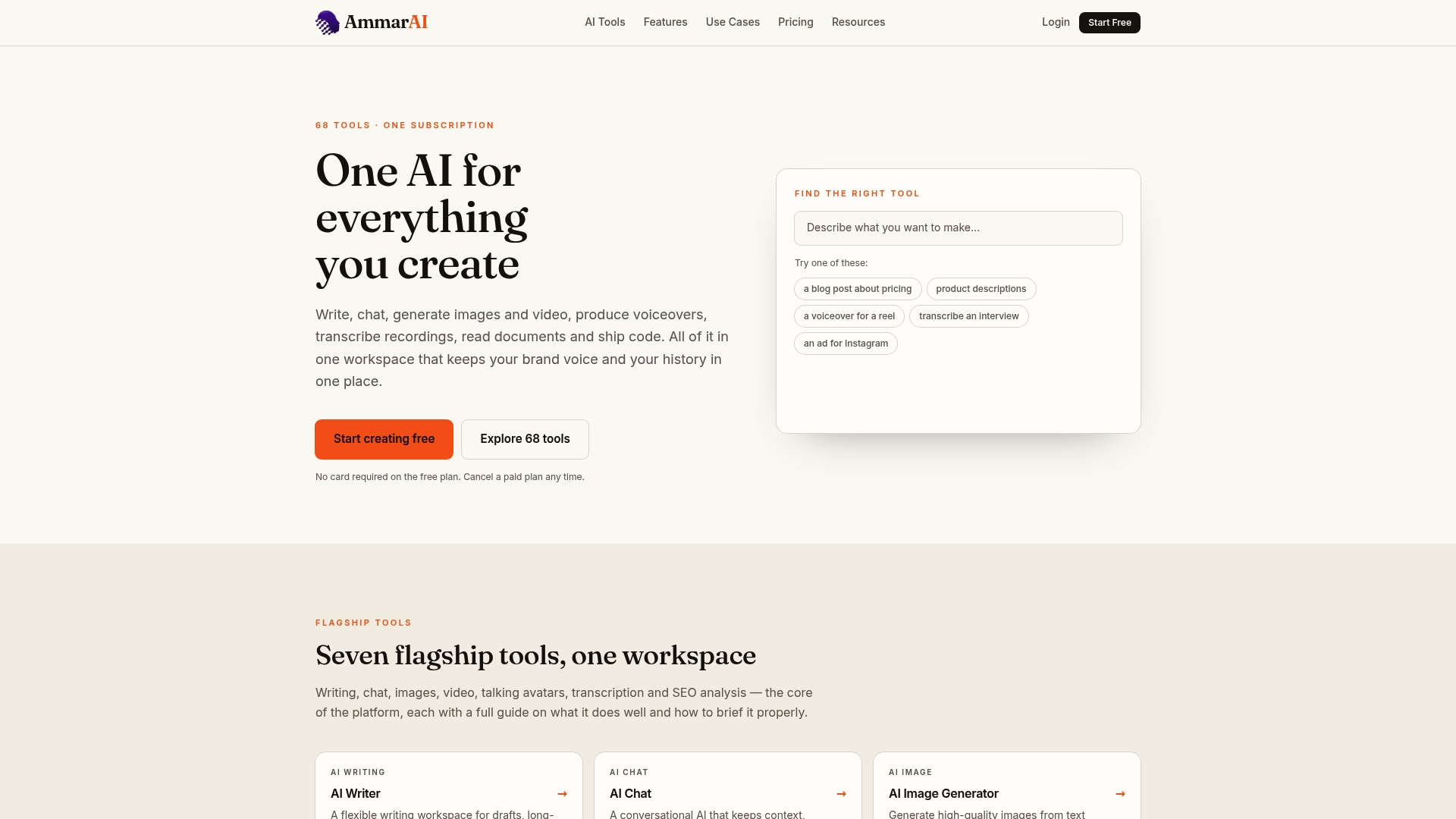
- One workspace covers description generation, brand-voice templates, and bulk export to your catalog tools.
- A free plan lets you test a small batch before committing to a paid tier.
- Paid plans start at $9.99 per month on the Starter plan, with Professional and Ultimate tiers for larger teams.
Run a small bulk test on 20 to 30 SKUs through our pricing page and see how the review workflow fits your catalog before scaling further.
FAQ
What is a product description example?
A product description example typically includes the product title, key features, materials or ingredients, dimensions, and what’s included, written in two to four sentences or a short paragraph. Baymard’s research on product page content shows the strongest examples answer the specific questions a shopper has before adding an item to cart, rather than using generic marketing language.
What is the 30% rule for AI?
Rather than relying on an unverified rule, apply documented standards instead, such as the FTC’s substantiation requirement for any claim your description makes.
How to use AI to identify a product?
Image-to-listing tools can infer certain attributes, like color, shape, or category, directly from a product photo, which speeds up listing creation when specs are incomplete. These inferred attributes should still go through manual verification before publishing, since a model can misread details like material or exact dimensions.
How to create a product description?
Start with a structured data sheet covering the product’s features, materials, dimensions, and certifications, then run that data through a prompt template built for short or long-form copy. Review the output against your source data to catch unsupported claims, then format it to meet platform requirements, including Google Merchant’s structured_description attribute for AI-generated text.
Does AmmarAI support bulk product description generation?
The workspace supports bulk generation through CSV import and template-based writing, with brand voice settings applied consistently across a batch. Review and export tools facilitate team checks before content reaches a live catalog.
Sources
- Federal Register, Volume 91 Issue 128 (Tuesday, July 7, 2026)
- Merchant Center help: Descriptions created using generative AI (Google Support)
Recommended
Recommended for you
- Best AI Tools for SEO: A Practical Buyer's Guide
Compare the best AI tools for SEO by research, briefs, drafting, audits, and internal linking, with pricing guidance, pros, cons, and picks for teams.
- Best AI Voice Generator: 6 Tools Compared
Find the best AI voice generator for narration, cloning, dubbing, and teams. Compare speech quality, language coverage, consent rules, pricing, and fit.
- 90 Days to a Workflow for AI Copywriting for Ads for Small Teams
Learn a workflow first approach to AI copywriting for ads: generate, review, and test ad assets in 30 day pilots while keeping brand voice.
Tools to try next
- Brand Voice
Define how your brand sounds once, and have every writing tool follow it.
- AI Agent Builder
Build agents that run real workflows on a schedule or trigger — reading, deciding and acting without you.
- AI Social Media Agent
An agent that plans, writes, schedules and adjusts a month of social posts across your accounts.