
Chat & Documents
How to compare two AI models in one chat
Different models answer the same question in different ways. One may be more concise, another more thorough or better at reasoning through numbers. AI Chat Pro lets you run a single prompt through two models at once and read both answers next to each other.
When you have read both, you pick the one you want to keep and the conversation continues from that response.
When to use this
- The answer matters enough to be worth a second opinion.
- You are deciding which model suits a recurring task.
- A first answer felt thin and you want an alternative before rewriting the prompt.
Run one prompt through two models
Open the model picker
Start a thread in AI Chat Pro and open the model list above the message box. Each card shows the model name, its knowledge cut-off and its output limit, and the search field at the top finds a model by name.
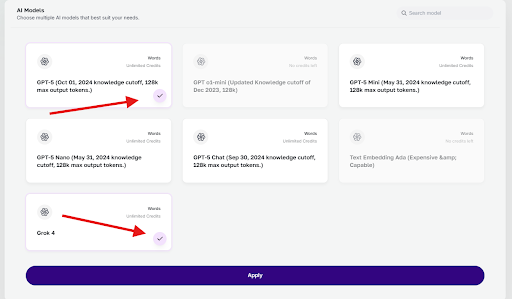
Tick a second model to compare answers side by side. Select two models and apply
Tick the two models you want to hear from, then choose Apply. Both names stay visible at the top of the thread so you always know which pair is answering.
Send your prompt once
Type the prompt as you normally would and send it. The question goes to both models and the two answers appear in parallel columns, so you can read the difference in depth, structure and tone without repeating yourself.
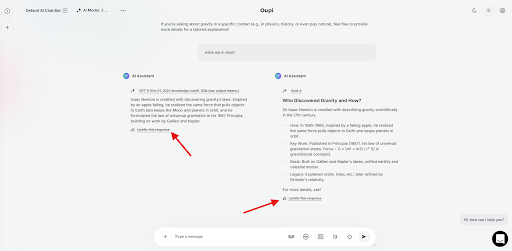
Both models answer the same prompt in parallel columns. Keep the answer you prefer
Under the column you want, choose the option to prefer that response. The chosen answer becomes part of the thread and every follow-up message continues from it.
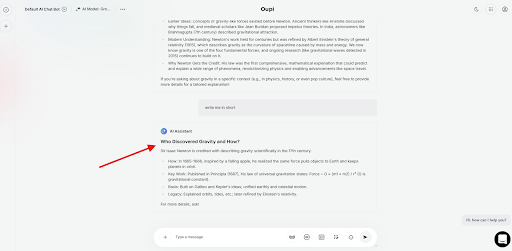
The preferred answer becomes the thread you carry on with.
Getting useful comparisons
- Compare on a real task, not a trivia question — differences show up in reasoning and structure.
- Pair a fast model with a stronger one when you want a sanity check rather than two long answers.
- Comparing uses the credits of both models, so use it where the decision is worth it.
- A confident answer can still be wrong. Agreement between two models is not proof.
Ready to try it?
Try AI Chat Pro in AmmarAI